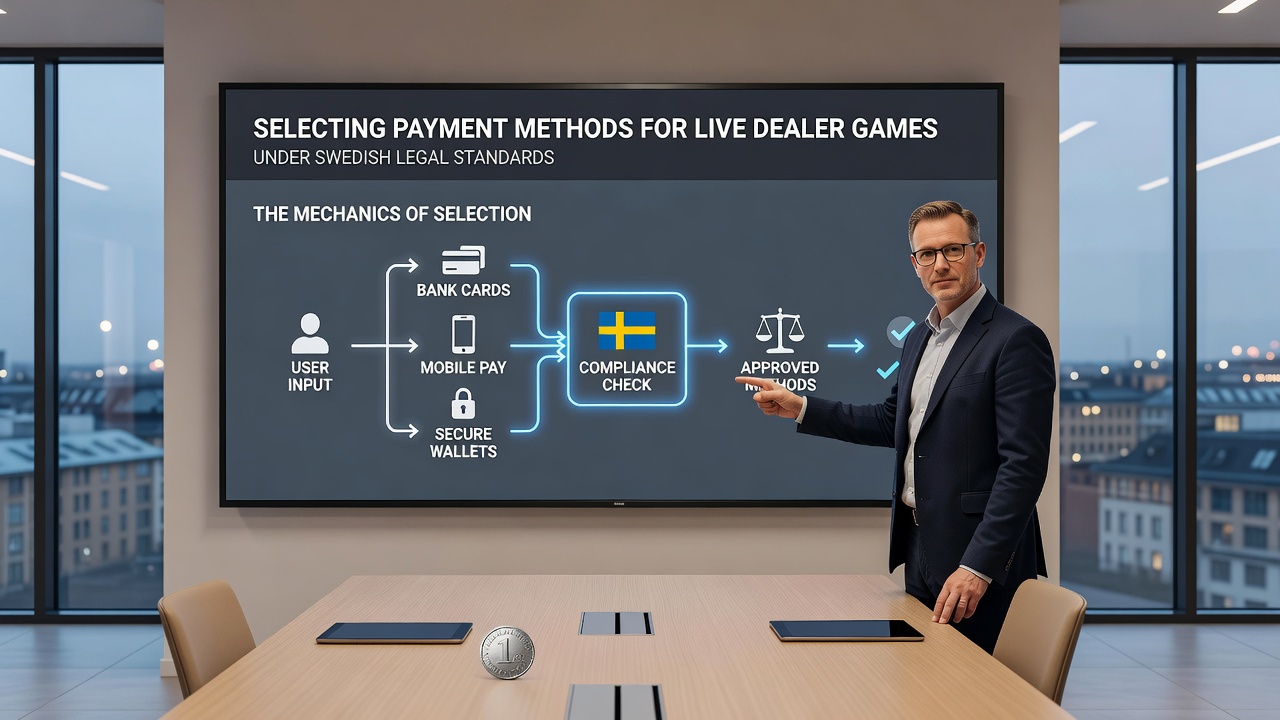
Inside the Mechanics of Selecting Payment Methods for Live Dealer Games Under Swedish Legal Standards
Swedish Regulatory Framework for Payments
Swedish law requires all licensed operators to channel live dealer transactions through payment providers that meet Spelinspektionen standards for traceability and security, and operators must verify that each method supports real-time balance updates during ongoing table sessions. Data from regulatory filings show that approved methods include bank transfers, certain e-wallets, and debit card networks, while unlicensed options face automatic exclusion at the licensing stage.
Core Selection Criteria Under Current Rules
Operators evaluate payment methods against a checklist that begins with licensing status, moves through technical integration tests, and ends with ongoing monitoring protocols, yet each step must align with the Gambling Act's emphasis on preventing money laundering. Researchers at Nordic gaming studies have documented how these evaluations typically involve mapping transaction speeds against the demands of live blackjack and roulette rounds, where delays beyond a few seconds can disrupt play flow. One documented case revealed that a provider failed integration because its settlement cycle exceeded the 24-hour window mandated for withdrawals tied to live sessions.
Compliance teams cross-reference each candidate method with anti-money laundering directives issued by the Swedish authority, and they confirm that every deposit leaves an auditable trail back to a verified player account. Figures released by Spelinspektionen indicate that roughly 95 percent of approved methods in 2025 relied on immediate verification layers such as BankID, which reduces processing time while satisfying identity checks required before live dealer tables open.
Technical Integration for Real-Time Play
Live dealer platforms demand payment gateways that can handle simultaneous deposit requests without interrupting video streams or dealer interactions, so developers test latency under simulated peak loads before deployment. According to industry reports from the European Gaming Association, systems that support instant top-ups allow players to replenish balances mid-session, a feature now standard among Swedish licensees. Observers note that these integrations often use API connections that trigger automatic compliance flags if transaction patterns deviate from established norms.
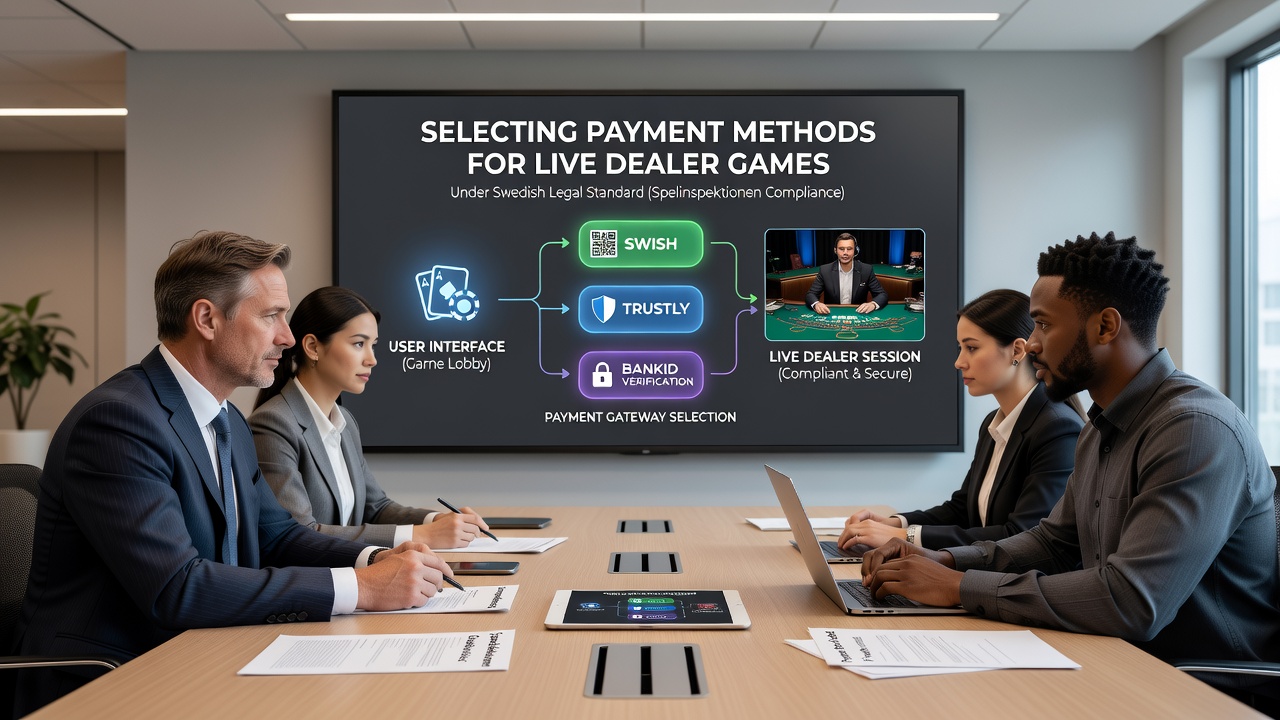
Verification and Player Protection Layers
Every payment method undergoes a pre-approval audit that includes stress testing for fraud detection and confirmation that withdrawal limits match responsible gambling tools such as deposit caps and session timers. Those who have studied Swedish market data observe that methods lacking built-in velocity controls rarely pass review, because regulators require automatic pauses when spending thresholds are reached during extended live play periods. In August 2026, updated reporting templates from Spelinspektionen are scheduled to require even more granular breakdowns of live dealer payment flows, building on existing quarterly submissions.
Operators maintain logs that link each transaction to a specific game round, and auditors can request these records within 48 hours under current enforcement procedures. Academic papers on European gambling compliance highlight how such granular tracking helps distinguish between recreational patterns and potential problem behavior without restricting game access outright.
Examples of Approved Method Categories
Bank transfers via trusted Swedish institutions remain the baseline option because they offer full traceability and direct ties to verified accounts, while selected e-wallets gain approval only after demonstrating equivalent security certifications. One operator that expanded its live dealer offerings in 2024 reported that adding a new debit card processor required six weeks of parallel testing to confirm that balance updates occurred within the two-second window expected by players at roulette tables. Industry analyses show that card networks with 3D Secure protocols consistently meet Swedish standards for live environments.
Payment selection also weighs regional availability, since operators must ensure that methods function reliably across the entire licensed market without creating barriers for players in rural areas. Data compiled by the Nordic Council of Ministers indicates that over 80 percent of live dealer deposits in Sweden route through methods already integrated with national digital identification systems.
Conclusion
Selection mechanics for payment methods in Swedish live dealer settings rest on documented compliance steps, technical compatibility checks, and continuous oversight that together maintain alignment with national legal requirements. Operators that follow these structured evaluations keep their platforms operational while meeting the transparency standards set by Spelinspektionen and related European frameworks. Further details appear on the Spelinspektionen site and in reports from the European Union legal database.